

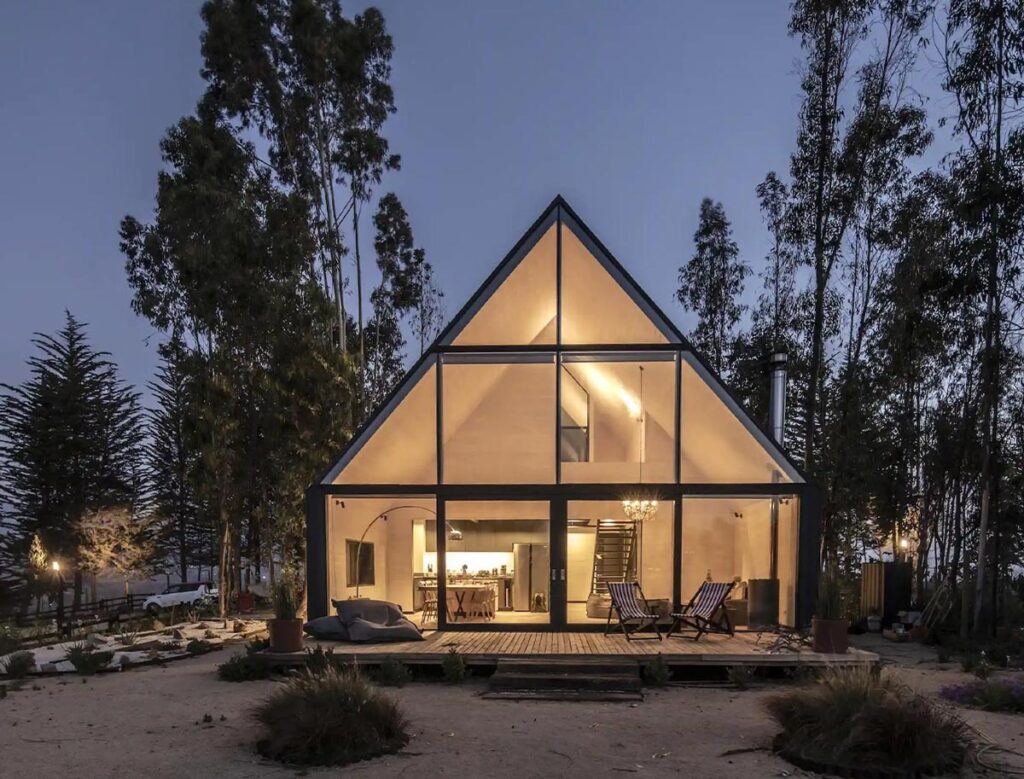
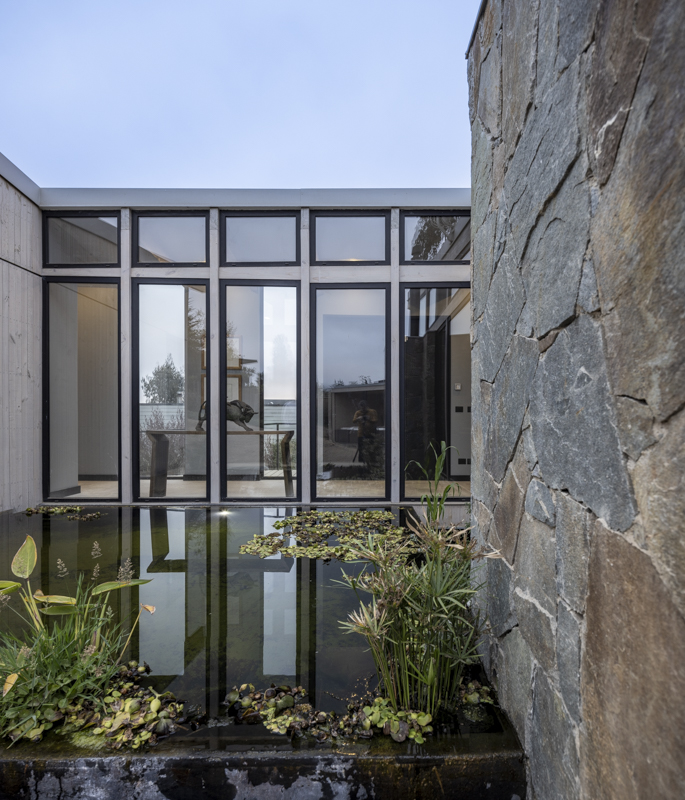
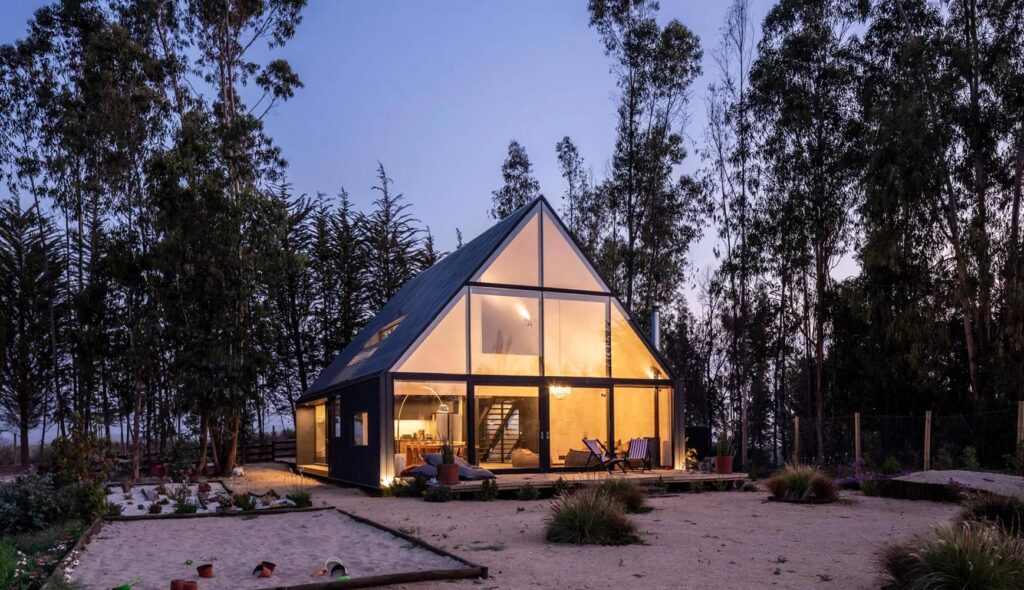
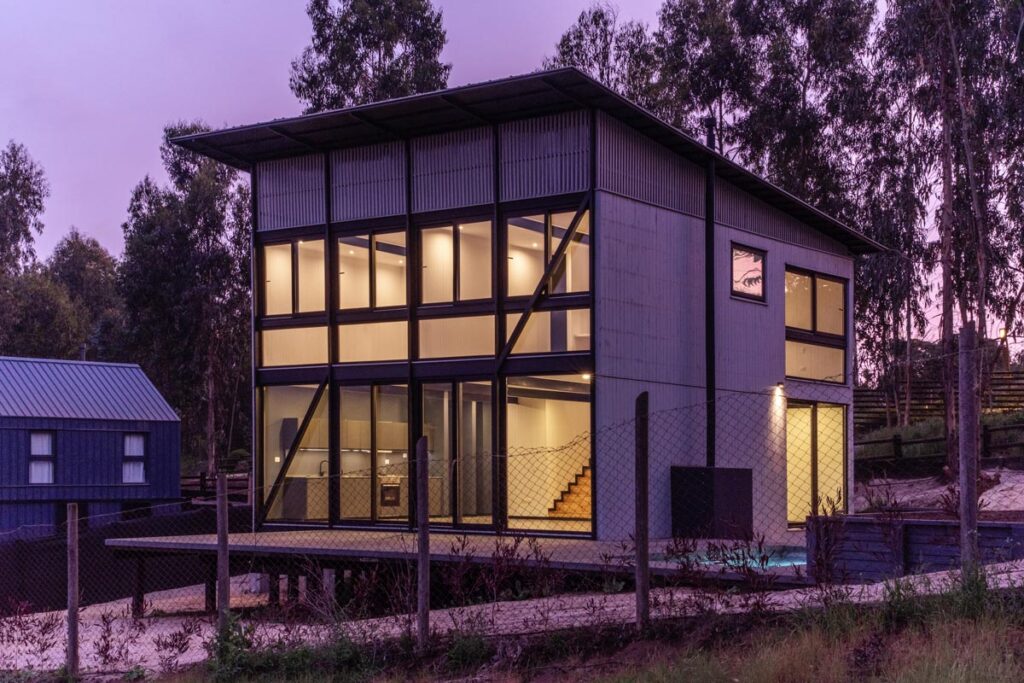
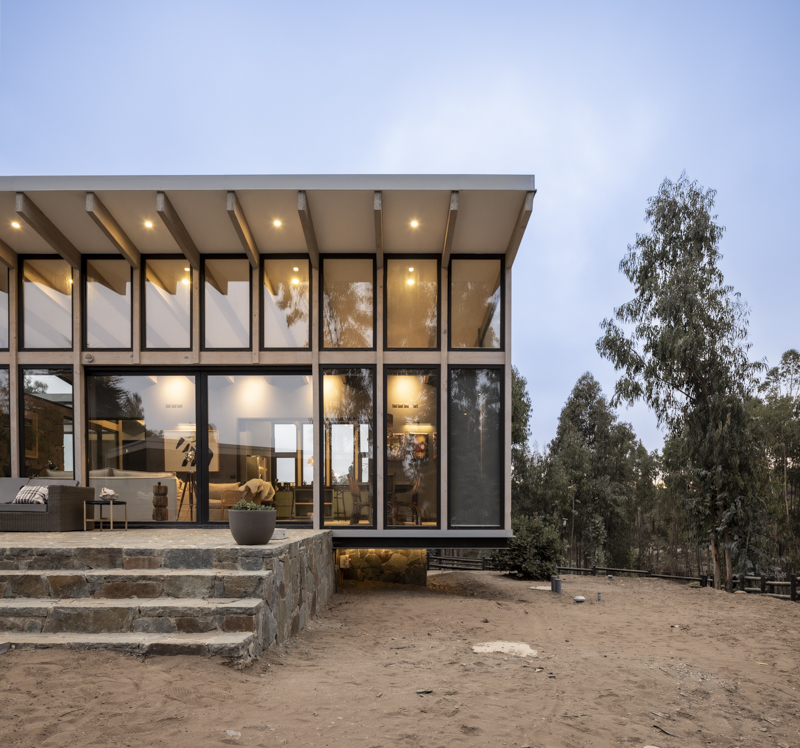
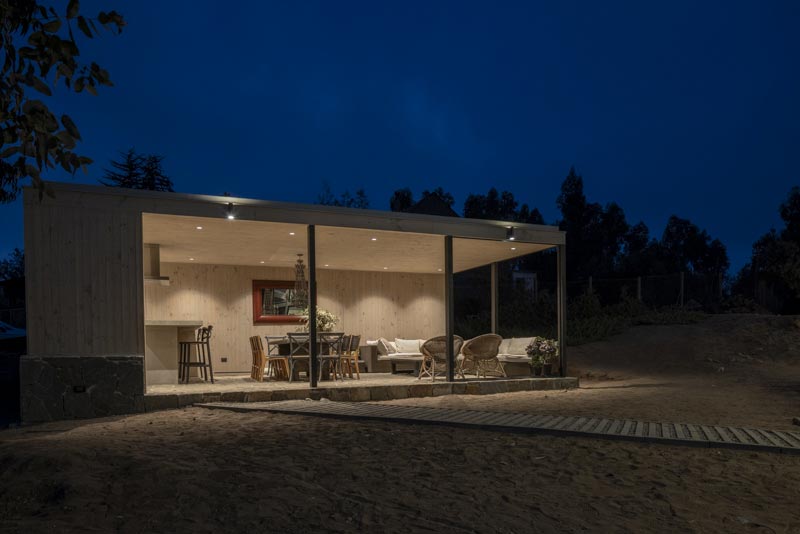
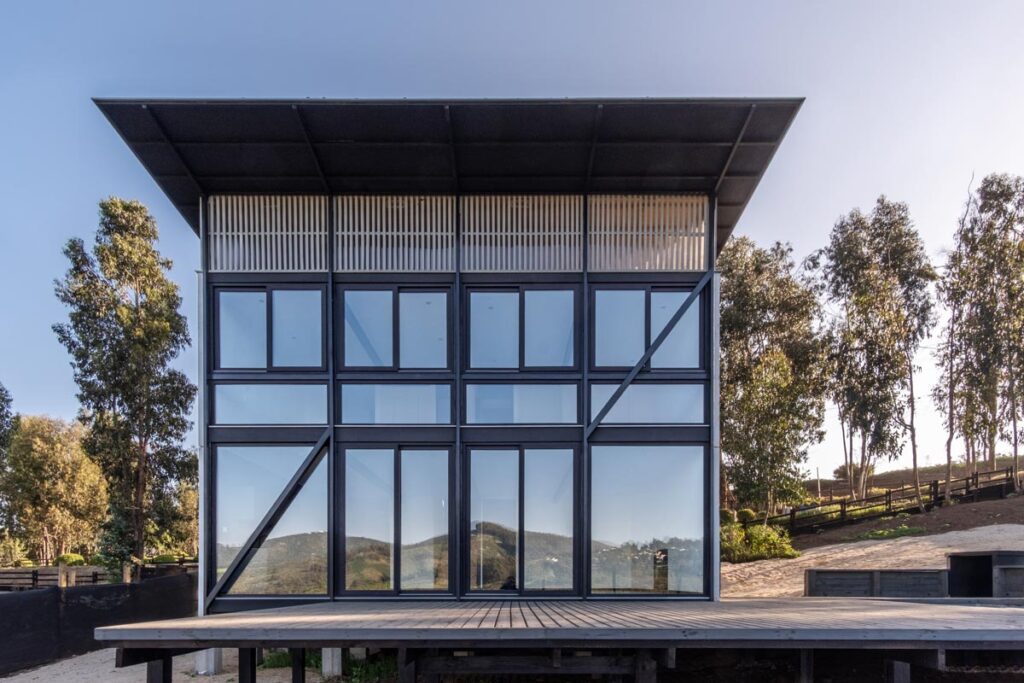
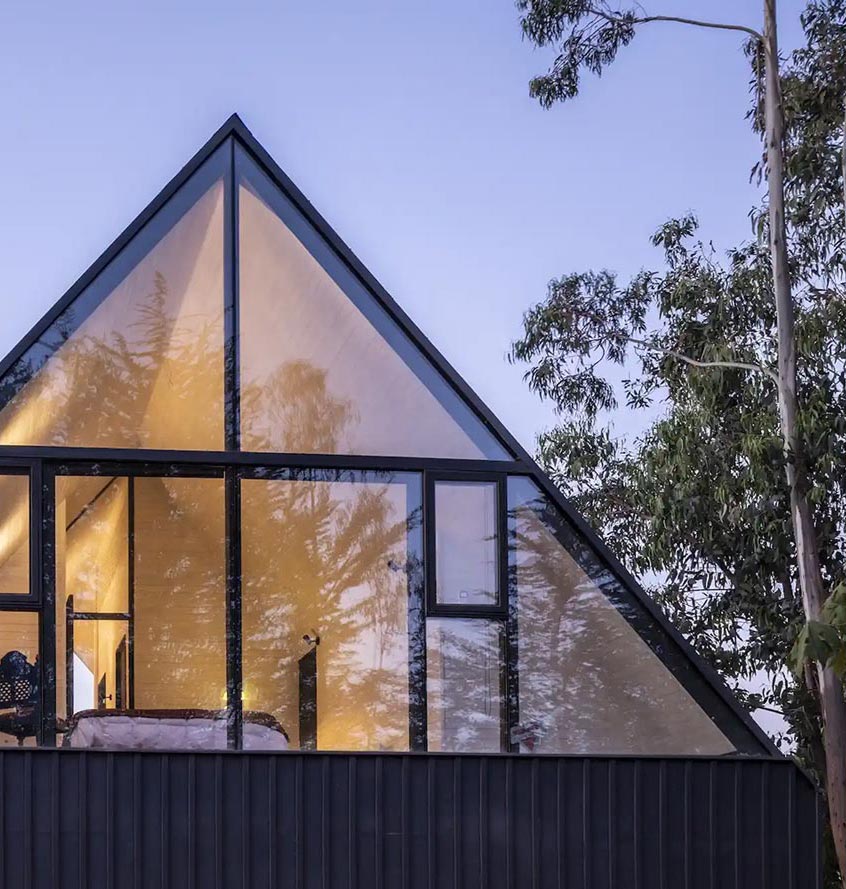
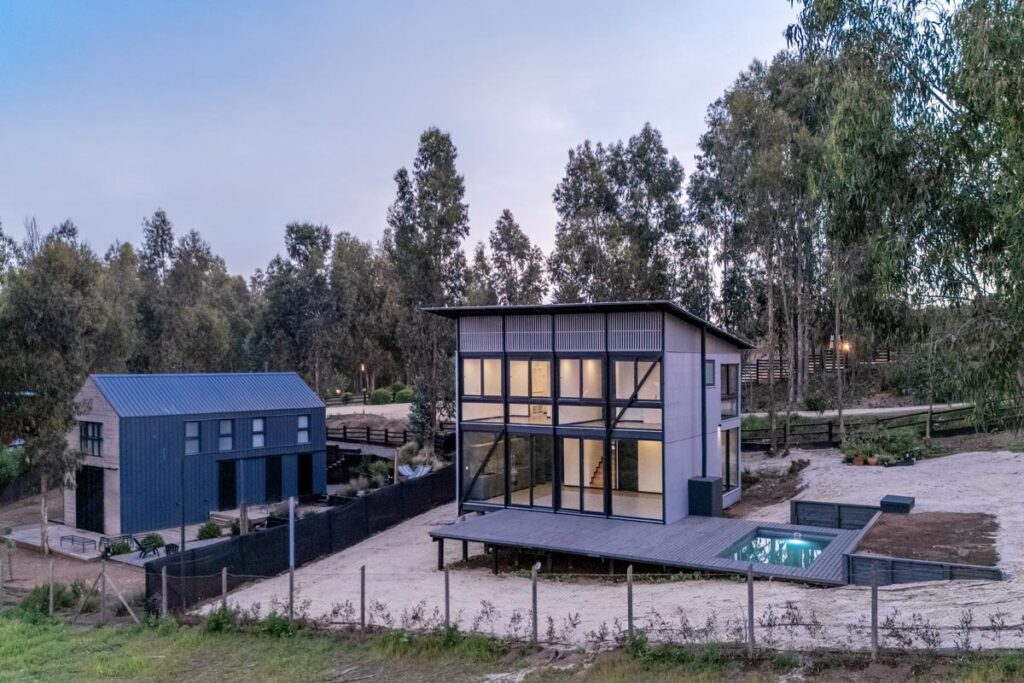
Six simple lines , drawn without taking the pencil off the paper, form a square with a triangle on top-two geometric shapes we all recognize as the most intimate and cherished of places: the home. Drawn by a child, the house would probably have a door and a window, a cozy fire in the fireplace and a tree in the garden. This was the archetypal design Raúl Herrera Daniel used for the Casa El Claro project in Maitencillo, in the Valparaíso region, a couple of kilometres from the Pacific Ocean coast in central Chile. Here, the Mediterranean climate is cooled year-round by breezes coming down from the inland mountain chain, the Cordillera de la Costa, towards the coastal cliffs and wide beaches. Oriented towards the mountain chain, the house takes its cue from its setting – a landscape reminiscent of California in the 1960s.
Casa El Claro is the vacation home of an actor couple, who worked closely with the architect, also supervising construction. It is also clearly a continuation of Raúl Herrera Daniel´s research into residential design, a typology that has held his interest since his college days.
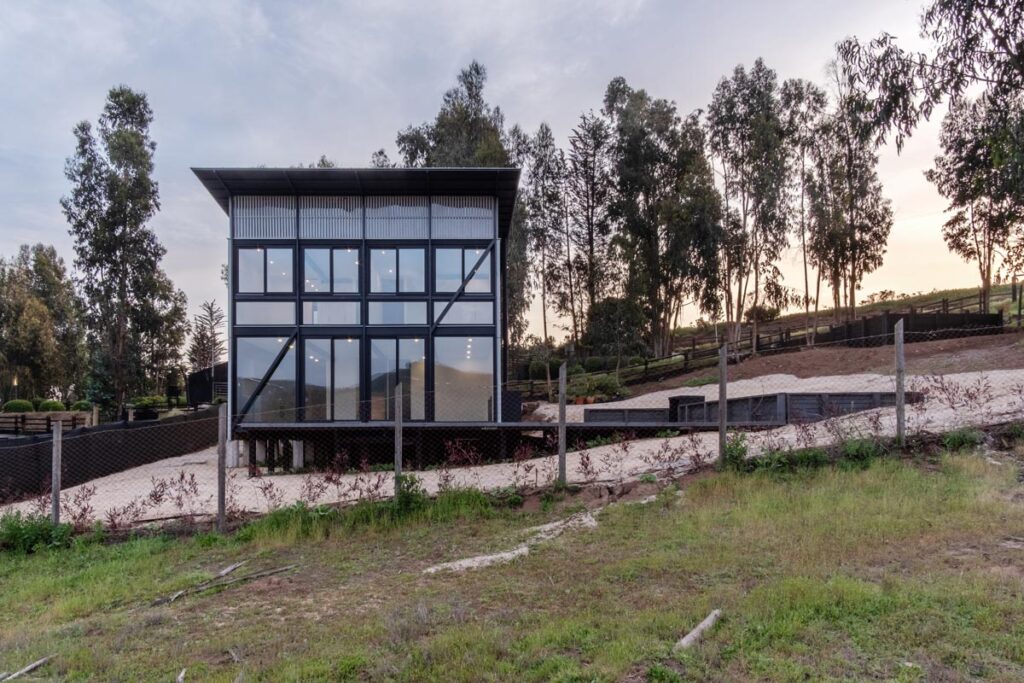
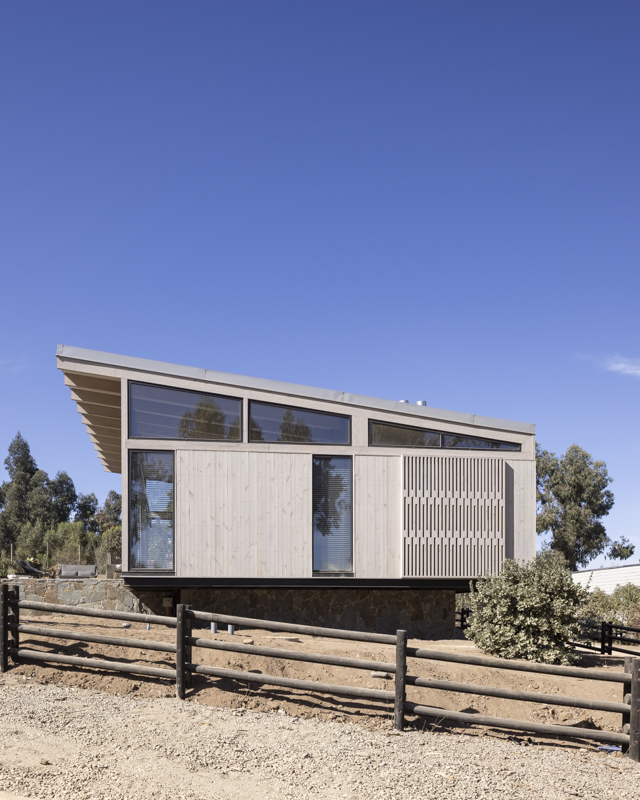
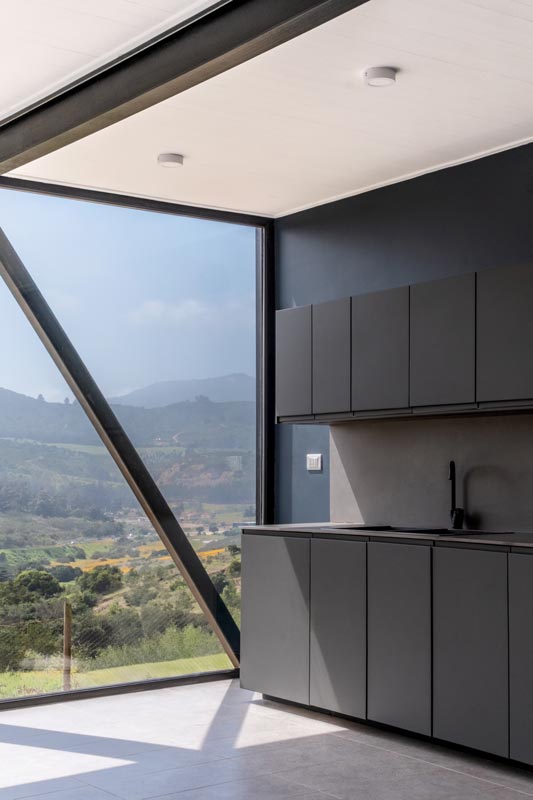
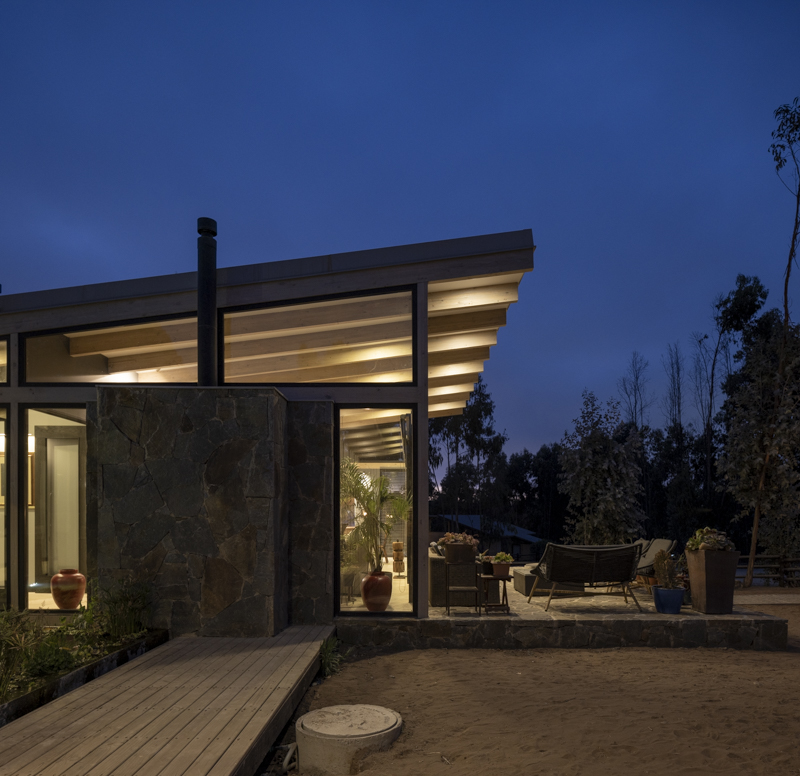
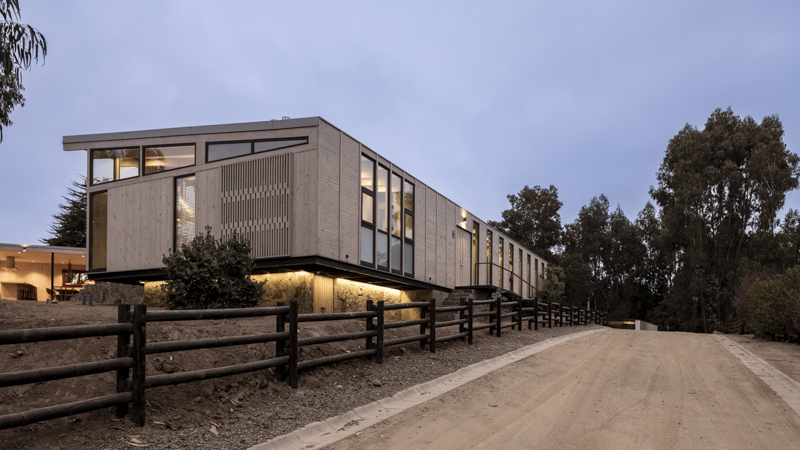
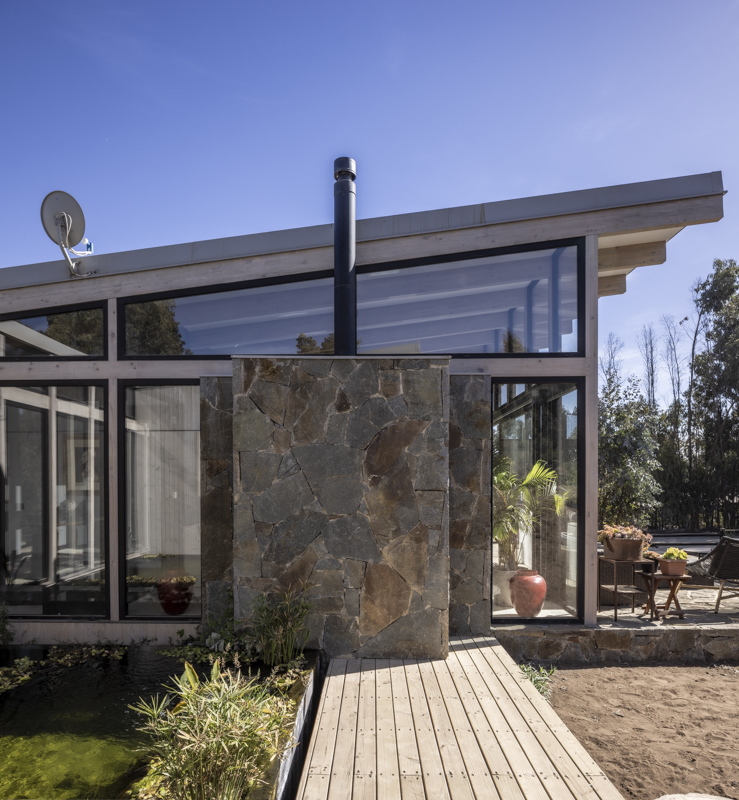
Built entirely of timber, except for the huge glazed windows, the house is a striking sculpture in the landscape while at the same time blending into its setting. A classical two-story building, the ground floor has an open area with living, dining room and kitchen plus two bedrooms and a bathroom; on the first floor – a mountain- lodge type mezzanine – are the master bedroom, walk-in closet and bathroom. The only non-traditional feature of this glabe-roofed hut configuration is its entrance: an unexpected diagonal sliced into the side of the house.
Inside, pinewood covers all the floors and walls right up to the ceilings. The structural frame is also timber; only the foundations and floor slabs are reinforced concrete. The double-skin outer envelope of fiber cement and wood cladding has an energy-efficient internal glass wool insulation layer. As well as cutting heating costs, the cavity wall has also been used to conceal the drainpipes.
The living area extends outdoors through a double sliding door onto a terrace, a full-height outdoor living space under the steeply pitched roof. In the kitchen, the joint island and dining table custom-designed by the architect together with his clients are in keeping with the characteristic simplicity of the house. Also of minimalist design – and in wood – are the steps and sides of the staircase leading directly from the open-space living area to the mezzanine level. A small distribution space at the top of the stairs gives access to a walk-in closet, bathroom and master bedroom, whose glazed facade overlooks the landscape on the opposite side of the house from the living room. At night, the soft interior lighting turns the house into a lantern in the forest and creates the cozy warmth of a home.
Elisa Grossi
The Plan # 141